Road-tripping with pets: the Motel 6 guide
About 95 million U.S. households count a pet as family, and plenty of them would rather drive than leave the dog or cat behind. In a July 2026 Talker Research survey of 2,000 pet-owning drivers, 73% said they're more likely to take a road trip than fly so their pet can come along, and 45% said they'd drive more than four hours to keep their pet with them.
Here's where your pet can sleep at Motel 6. Pets stay free at Motel 6: up to 2 dogs or cats per room, with a combined weight of 150 lbs or less. Pets must be declared at check-in and leashed outside the room. On the road, plan the day around your pet. Vets suggest a stop every two hours and a restrained pet, and they say never to leave a pet alone in the car. Then pick places that welcome pets. Some parks keep dogs off every trail, while others, like Shenandoah and Petrified Forest, open most of theirs to leashed dogs.
Jump to:
- Why so many pet owners drive
- Plan the drive around your pet
- In the car
- Getting a nervous pet ready
- Road-tripping with a cat
- Before you go: papers, packing and emergencies
- Keeping costs down
- At check-in
Updated Oct 1, 2026
Why so many pet owners drive
The biggest worry in that survey was lodging: 41% named finding a pet-friendly place to stay as their top challenge. After that came planning stops around a pet's needs and dealing with a restless or anxious pet in the car.
This guide works through those worries in order, from the first mile to the front desk. Along the way it points to our more detailed guides: dog-friendly national parks for fall and winter, a printable pet road-trip checklist, and Moab with dogs.
Plan the drive around your pet
Plan the day in short legs. The American Veterinary Medical Association suggests stopping about every two hours on long drives so dogs can stretch, drink and relieve themselves, with collar, tags and leash on any time they're out of the car. Feed small portions as you go instead of one big meal.
Know your overnight stop before you leave. It takes the pressure off the last few hours of driving, when you and your pet are both worn out. You'd be in good company: in the same survey, 45% said they start planning a pet-friendly long weekend at least three weeks ahead.
Rest areas, town parks and state parks make better leg-stretch stops than a busy gas station lot. You want grass, some shade and a quiet corner away from traffic.
In the car
Restrain your pet. The AVMA says dogs should ride in a harness, crate or carrier, not in the front passenger seat if the car has airbags, and never on the driver's lap. If your dog rides on the seat, the CDC suggests the back, in a harness clipped to the seat buckle. Secure any crate so it can't slide when you brake.
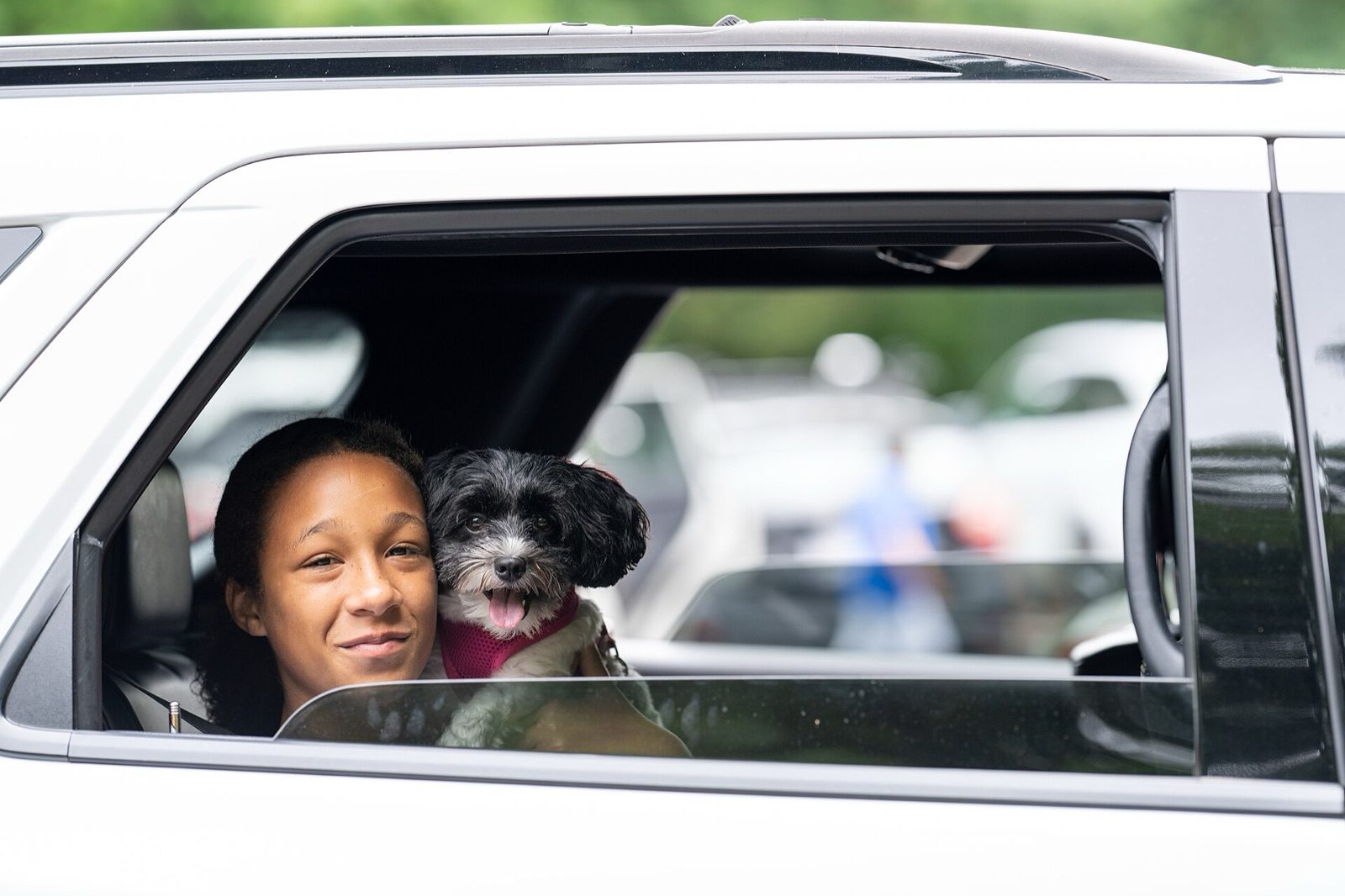
As much fun as it looks, keep heads inside the window. Road debris can injure eyes and ears.
Never leave a pet alone in a parked car. The AVMA notes a car's interior can warm 19°F in just 10 minutes, and cracking the windows doesn't help. Cold cars are a risk too, especially for young, old or thin pets. Eat where there's outdoor seating or a drive-through, or travel with someone who can stay with the pet.
Getting a nervous pet ready
If your pet isn't used to the car, start small. The ASPCA and CDC both suggest a series of short drives that gradually get longer: a trip to the park, then a half-day outing, then a full day.
Make the crate or carrier somewhere your pet wants to be. Leave it open at home with a familiar blanket or toy inside, and hand out treats there. On the road, bring that same blanket and a favorite toy so the car and the motel room smell like home.
If your pet still gets anxious or carsick, talk to your vet before the trip, not after. Plenty of people deal with the same thing: in the Talker Research survey, 28% of pet-owning drivers named a restless or anxious pet as one of their biggest road-trip challenges.
On travel days, take your pet for a long walk before you set off so they're ready to settle. Keep the car cool and quiet, and stick to the usual feeding times. The ASPCA suggests a light meal three to four hours before you leave, not a full breakfast at the curb.
Road-tripping with a cat
Cats can road-trip too, but they take more setup than most dogs. The AVMA says to keep cats in a cage or carrier for the entire drive. It helps them feel secure, keeps them out from under the pedals and stops an escape when you open the door at a stop.
Start practicing at home a few weeks out. Leave the carrier open in the living room with a familiar blanket or toy inside, then try short drives around town. Pack a small litter box and a scoop, and don't open the carrier until the room door is closed.
On the road, offer water at every stop and keep the carrier level and secured, not perched on a seat where it can tip. Give your cat a quiet, covered spot in the back seat, keep the music down, and check on them each time you stop.
Before you go: papers, packing and emergencies
See your vet before a long trip. The CDC recommends making sure vaccinations are current, getting your pet microchipped with up-to-date contact details, and checking the rules before you cross state lines. Bring copies of vaccination records, rabies especially.
The AVMA also suggests carrying emergency numbers: your own vet, a national poison control hotline and a 24-hour emergency vet near where you're headed. ASPCA Animal Poison Control answers around the clock at (888) 426-4435; a consultation fee may apply.
Everything else is in our printable pet road-trip checklist: food, water, meds, the crate, waste bags and a travel tag with your cell number.
Keeping costs down
Bring your pet's usual food from home. You skip last-minute shopping in tourist towns, and the ASPCA recommends bottled water on the road, since unfamiliar water can upset a pet's stomach. An upset stomach can turn into an unplanned vet visit.
Walk where it's free. Many of the best dog hikes near Moab are on BLM land, and the Corona Arch Trail has no fee. On any route, town parks, rest areas and state park trails make good free leg-stretch stops.
And pick a place to sleep that welcomes your pet, so you're not paying for boarding back home. Motel 6's pet rules are in the box at the top of this guide.
At check-in
When you arrive, let the front desk know you've got a pet with you, and ask where the best spot is for a late-night walk. Keep your pet leashed in the lot and the hallways, and bring a familiar blanket or bed so the room smells like home.
Plan your evenings so your pet isn't left alone in the room. Moab's visitor bureau warns that a barking dog left behind can draw a nuisance complaint, and some places require a crate any time a pet is alone. Take your dog to dinner on a patio, get takeout, or have one person stay back.
In the morning, walk your dog before you load the car, then do one last sweep of the room for bowls, toys and leashes.
Motel 6's pet rules are in the box at the top of this guide and in the questions below.