Snowbird drive south: where to stop overnight on I-75 and I-95
Most snowbirds just take the interstate that starts closest to home. I-95 runs down the East Coast from Maine through New York, Virginia and the Carolinas to Florida. I-75 starts in Michigan and cuts through Ohio, Kentucky, Tennessee and Georgia. Neither one is short: the federal route log puts I-95 at about 1,905 miles and I-75 at about 1,693.
Drive the interstate that matches both ends of your trip. I-95 serves the East Coast and lands on Florida's Atlantic side, while I-75 comes down from the Midwest and runs down the Gulf side of the state. Split the drive into one to three nights. Keep each day to daylight hours, and have the overnight stops booked before you pull out of the driveway. If your dates are flexible, go in December. Hurricane season ends November 30, so by then you've missed the tail end of it.
Jump to:
- Which road is yours
- Plan by driving day
- When to leave
- Rest stops and welcome centers
- Road tools and tolls
- Pack the car for a long haul
- With pets, medications and mobility needs
- Common mistakes
Updated Oct 1, 2026
Which road is yours
So I-95 is the natural road out of New York, New England and the mid-Atlantic, and I-75 is the one from Michigan and Ohio. Those happen to be the places a University of Florida study found many of the state's winter residents come from. (The study is from 2004, so it isn't exactly fresh.)
Then think about where in Florida you're headed. I-95 follows the Atlantic side through Jacksonville toward the east coast cities; I-75 runs down the middle and the Gulf side. If your winter place is near one coast, the matching interstate usually spares you a cross-state drive at the very end, when you least want one.
Plan by driving day
Start by deciding how long you actually want to be behind the wheel each day, then pick towns to fit. A shorter day leaves room for a walk, an early dinner and a proper night's sleep, and that adds up as the trip goes on.
Out of the New York area on I-95, a common pattern is three nights: Fredericksburg, Virginia once you're past Washington; Florence, South Carolina in the middle; and Brunswick, Georgia just short of Florida. If you're starting farther south, you can drop the first one.
On I-75 from Michigan or Ohio, look at Knoxville or Chattanooga in Tennessee, then Valdosta, Georgia as your last night before the Florida line. From Ohio, two nights are often plenty.
Try to be parked by dark. Winter days are short, and an unfamiliar interstate at night is the hardest part of the whole trip. Book each night before you leave so you're not hunting for a room when you're tired and cranky.
When to leave
Many snowbirds head south sometime between November and January. The Atlantic hurricane season runs through November 30, so if your dates are flexible, a December start keeps you clear of it. Watch the forecast regardless.
November gives you the end of storm season and mild driving weather in the South, but keep an eye on the tropics and on Thanksgiving weekend traffic. In December hurricane season is over, though early winter storms can hit the mountains on I-75 in Kentucky and Tennessee. January is the coldest month at the northern end of your drive, so check the forecast at both ends.
If you can help it, don't start on a holiday weekend, when you'll be sharing the road with a lot more families. Leave midweek instead and you get quieter roads and easier check-ins.
Rest stops and welcome centers
State welcome centers are the best breaks on either interstate: clean restrooms, maps and staff who know the road. Georgia runs nine state Visitor Information Centers, open daily except a few holidays. The handy ones for this trip are I-75 at Ringgold near Tennessee, I-95 near Savannah at Port Wentworth, and Lake Park on I-75 near the Florida line.
Tennessee has 16 state welcome centers, every one ADA compliant with a pet area. Heading south on I-75, the Jellico center sits just over the Kentucky line and makes a good first stop in the state.
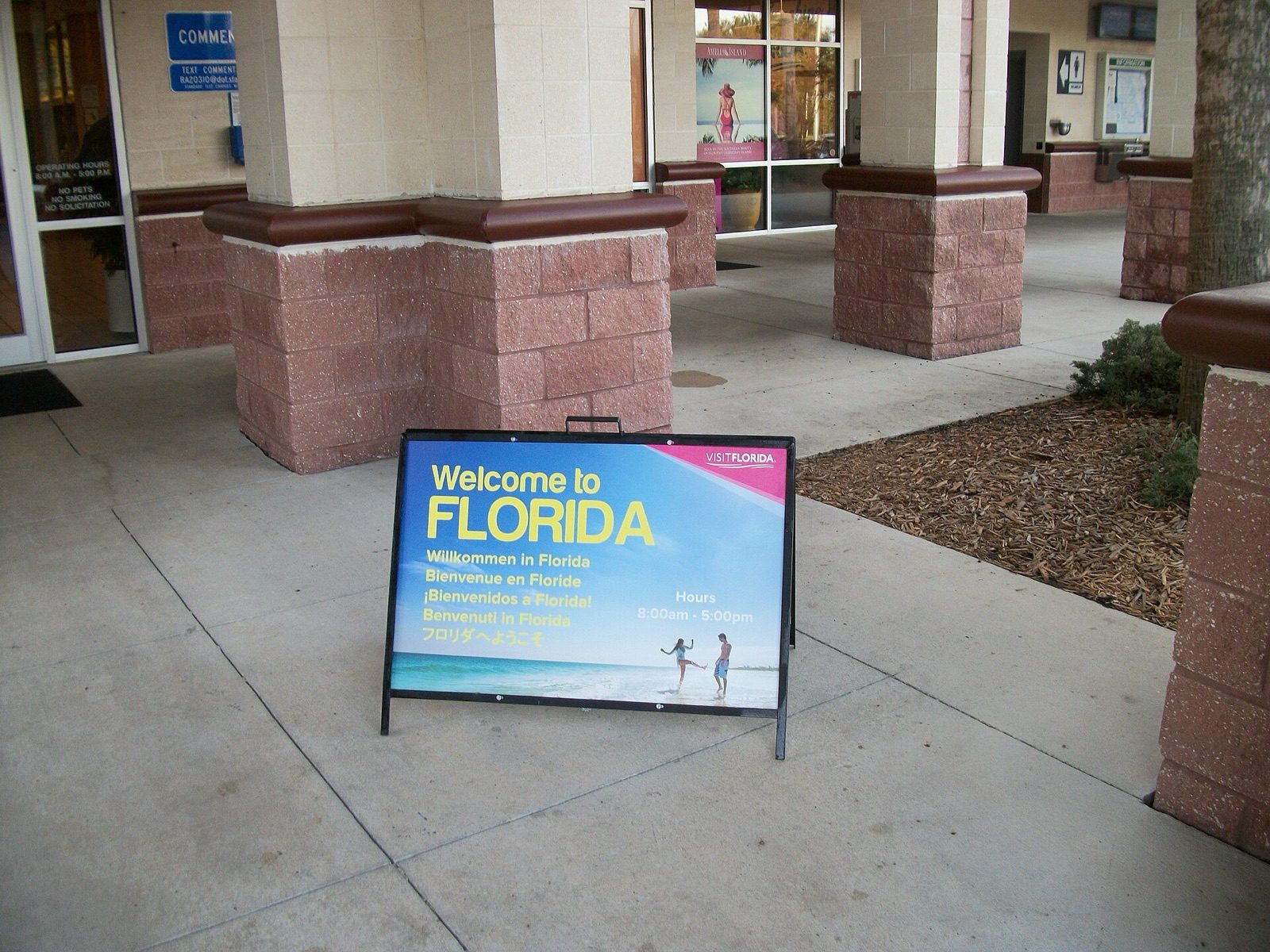
Once you're in Florida, pull into the state Welcome Center. There's one on I-95 at Yulee and one on I-75 at Jennings, and they've been handing visitors a cup of citrus juice for decades. Grab a map, drink the juice, and take a minute to enjoy having made it.
Road tools and tolls
Save the state traffic services on your phone before you go. Georgia's 511GA is free by website, by app or by dialing 511, and it covers both I-75 and I-95. Florida's FL511 has traffic cameras, incident lists, weather alerts and truck parking information.
I-95 and I-75 are mostly free to drive. It's Florida's toll roads that catch newcomers. Florida's Turnpike collects tolls electronically, through SunPass, another compatible transponder, or Toll-By-Plate, which photographs your plate and mails you a bill. If you'll be in Florida all winter, a SunPass is worth a look.
And if you'd rather skip a big chunk of the drive, Amtrak's Auto Train carries you and your car from Lorton, Virginia to Sanford, Florida. It runs daily and takes about 17 hours, and Amtrak says it saves you 900 miles of driving.
Pack the car for a long haul
Keep a small day bag within reach so you're not unpacking the whole car every night: medications, phone chargers, a change of clothes, toiletries. Put your ID, insurance card and any medical paperwork in there too.
Pack water and easy snacks, plus a blanket in case you get stuck in traffic on a cold morning up north. Fill the tank at breakfast rather than at the end of a long day, and walk around at every stop so your legs don't stiffen up.
If you're hauling a winter's worth of stuff, load the car so the overnight bag and anything valuable come out easily. The less you leave in sight in a parked car, the easier you'll rest.
Have the car checked before you go: tires, wipers, oil, the spare. A breakdown on a busy interstate is miserable, and a quick check at home is the easiest way to avoid one. Throw a paper map or a printed route in the glove box in case your phone dies.
With pets, medications and mobility needs
Dogs and cats travel better with a routine. Stop every few hours for a walk and some water, and use the pet areas at welcome centers; every Tennessee welcome center has one. Bring your pet's records and a recent photo in case you get separated.
Refill prescriptions before you leave and keep them in your day bag, not the trunk. If you'll see a doctor in Florida over the winter, bring a list of your medications and your regular doctor's contact information.
If anyone in your group uses a wheelchair or walker, ask for an accessible room when you book, and plan your stops around welcome centers. In Tennessee, they're all ADA compliant.
Build in longer breaks than you think you need. Getting out every couple of hours helps with stiffness and circulation on a long drive, and it keeps the driver sharp. If two of you can drive, swap at each stop.
Common mistakes
The big one is driving too far on day one. You're excited, so the first day turns into the longest, and you pay for it on day two. Keep it comfortable.
Then there's leaving the room to chance. Holiday weeks and event weekends fill up along these corridors, so book your nights ahead and keep the confirmations handy.
People also forget the weather where they start. On I-75, the mountains of Kentucky and Tennessee can see snow or ice in winter even while Florida is warm. Check the forecast for your first day, not just your destination.
And tolls. Florida's Turnpike bills electronically, by transponder or by a photo of your plate, so a toll bill can turn up in the mail weeks later. Plan your Florida route with that in mind, or get a transponder.